Field Case 01 — Adaptations · On loan for a term · Singapore
A photo of a dinosaur teaches nothing.
Hand them the bone.
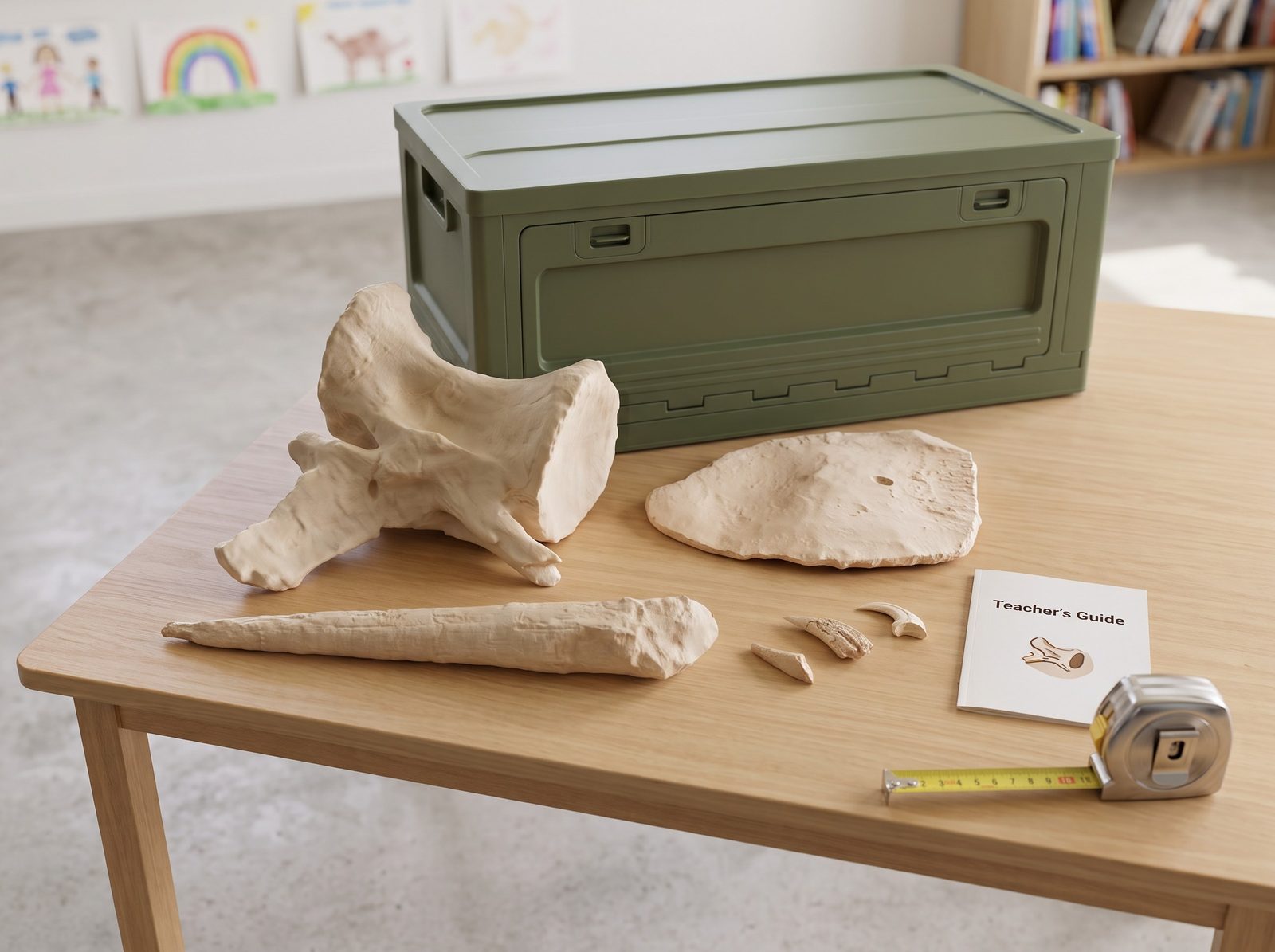
A crate of fossil replicas a class can actually hold — each one made from a 3D scan of a real museum specimen — with a teacher’s guide that turns them into a lesson. We loan it to your school for a term, then it moves on to the next.
 Illustration
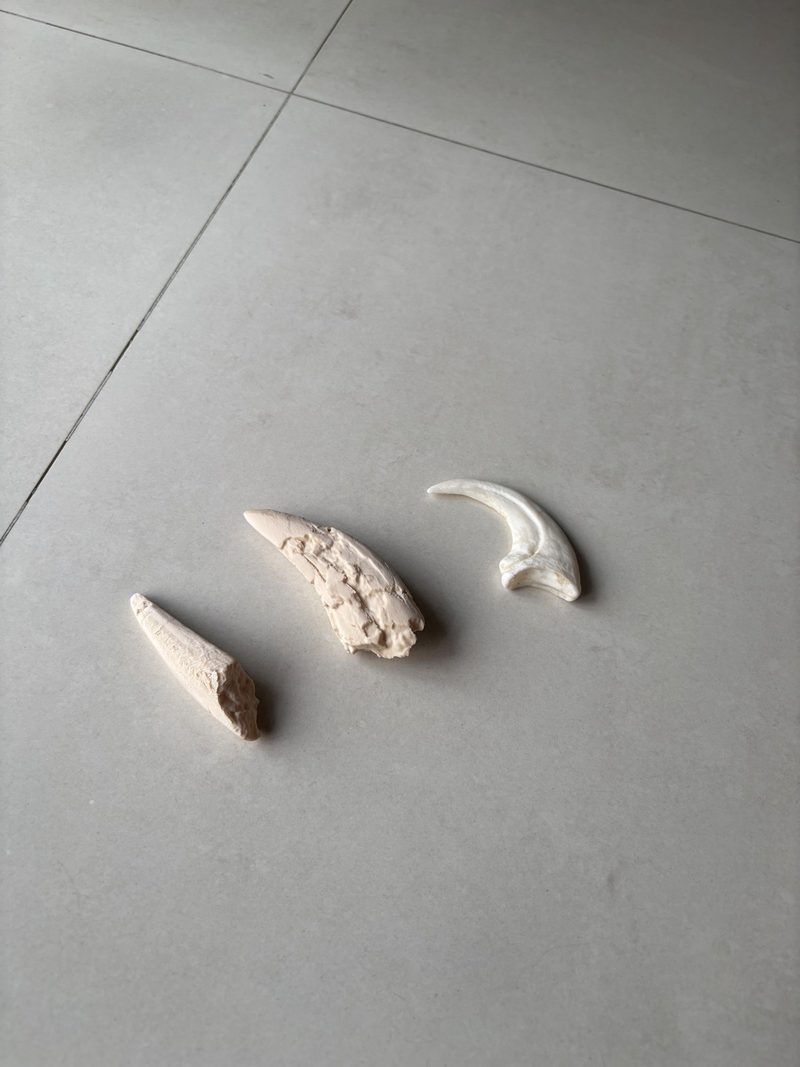
What’s in the kit · 11 specimens
Teeth, hips, and questions nobody has answered.
Teeth & diet
- Tyrannosaurus tooth — the crusher
- Spinosaurus tooth — the fish-grabber
- Edmontosaurus tooth battery — the grinder
- Hungarosaurus jaw — the leaf-cropper
- Deinonychus claw
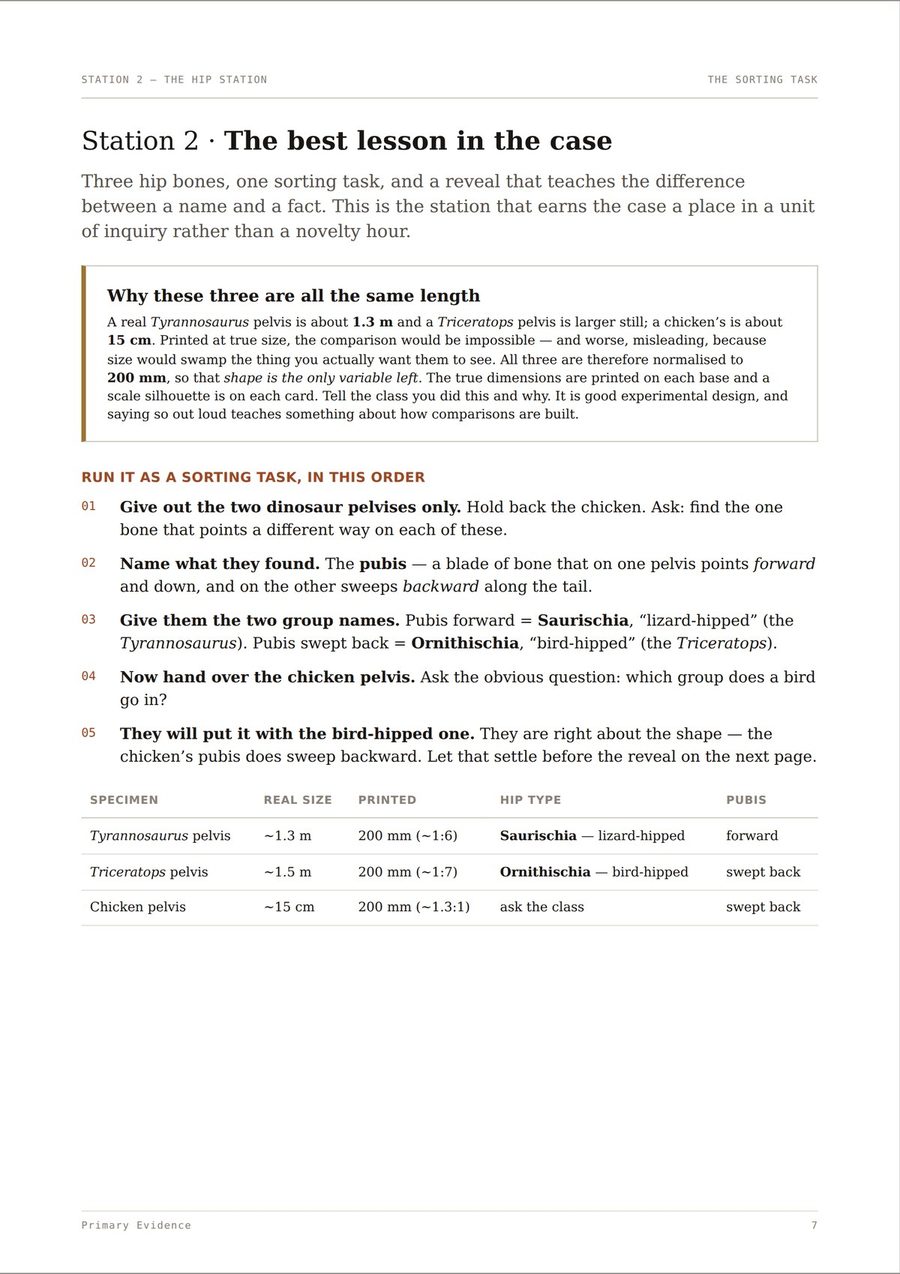
The hip station
- Tyrannosaurus pelvis
- Triceratops pelvis
- Chicken pelvis
All three scaled to the same length, so shape is the only difference — and the chicken upends the answer.
Unsolved science
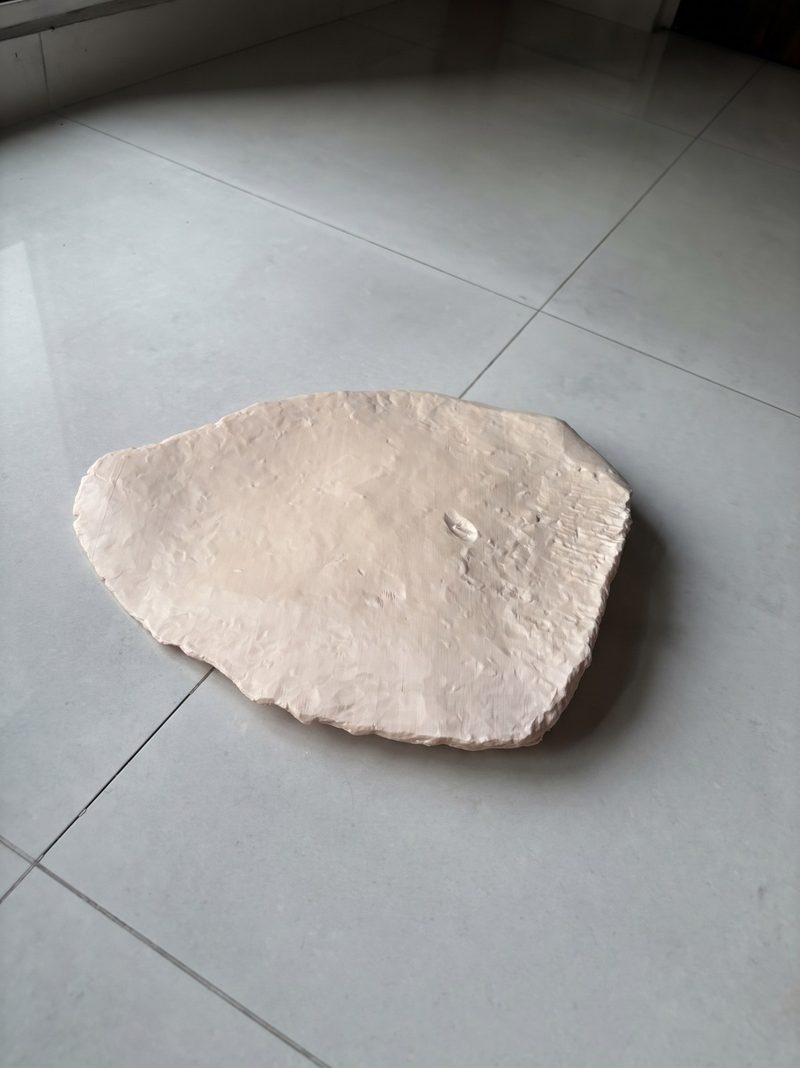
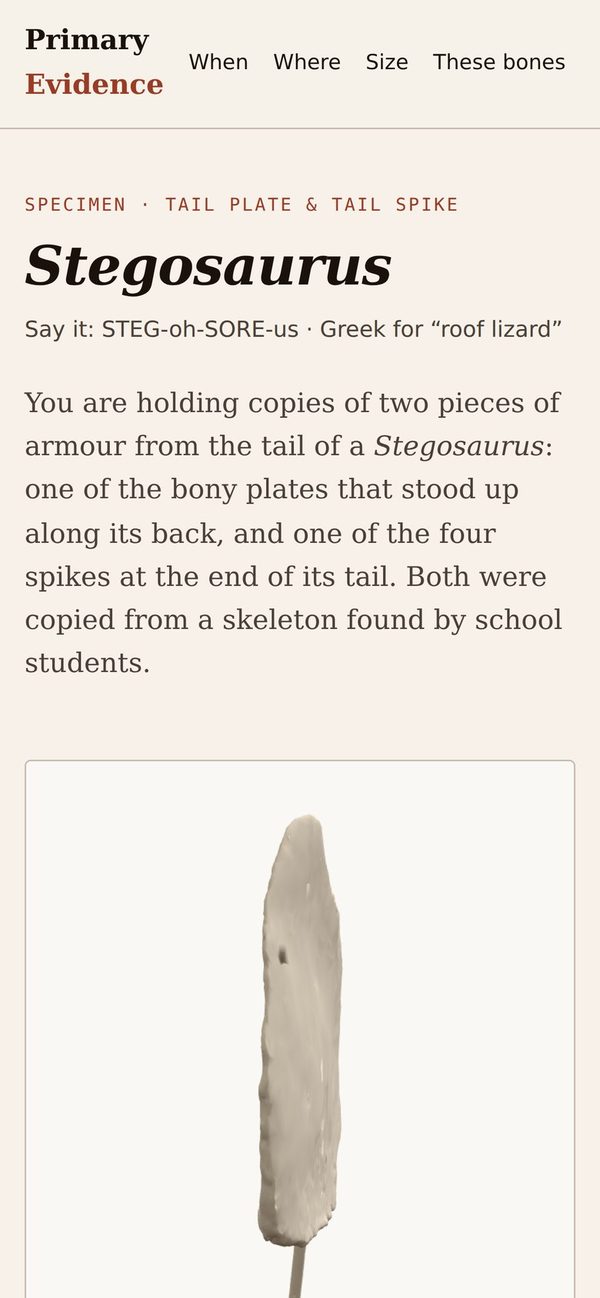
- Stegosaurus tail plate
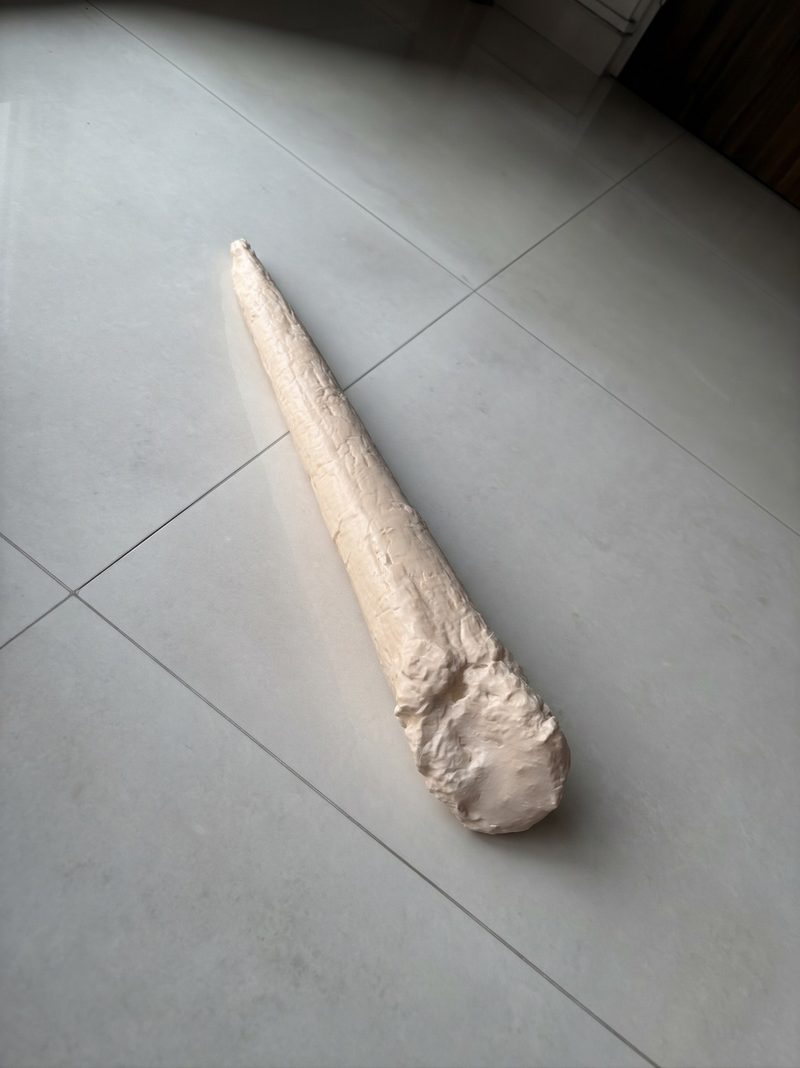
- Stegosaurus tail spike
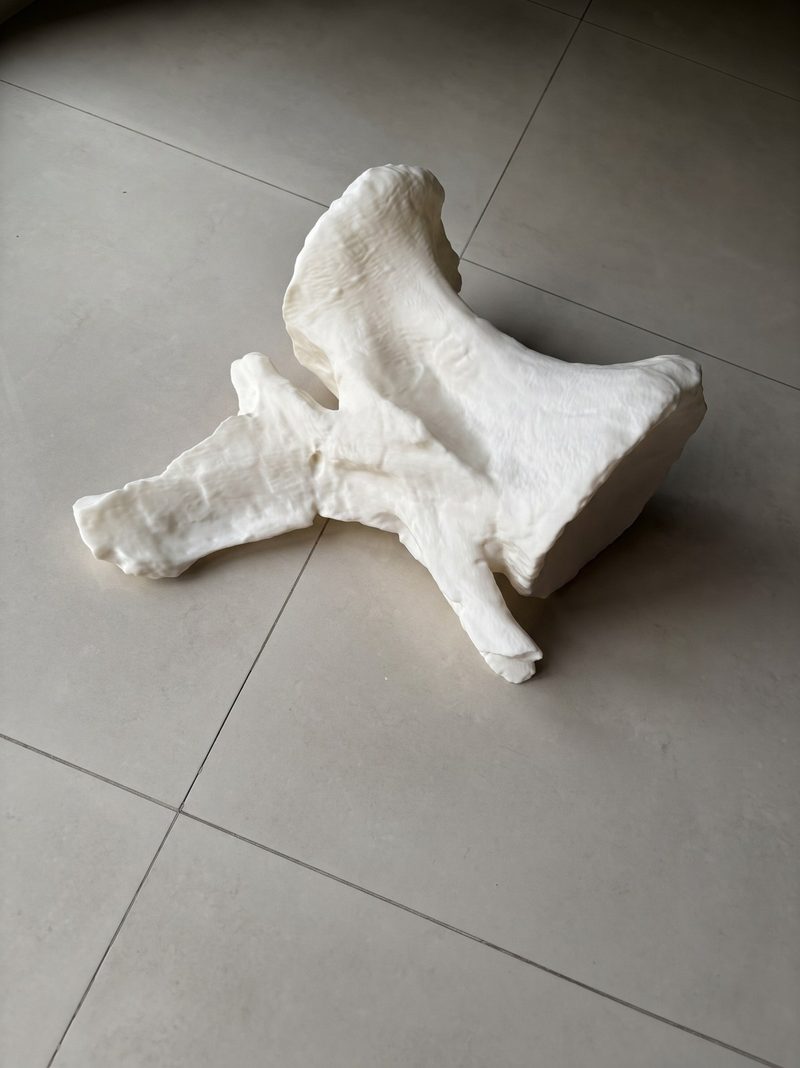
- Diplodocus tail vertebra
“Nobody knows yet. Here is the evidence. What do you think?”
Real specimens, honestly labelled REPLICA
Every piece is reproduced from a published 3D scan — Smithsonian, Yale Peabody Museum, Denver Museum of Nature & Science, Penn State and others — never sculpted from imagination. Each is marked as a replica, and the guide records its source, catalogue number and true size.
Found by children, first
The first T. rex tooth ever found was picked up by a schoolboy in Colorado in 1874. The Stegosaurus skeleton our plate and spike are scanned from was dug up by high-school students on a field trip in the 1930s.
How it works
One kit, one term, a lesson that runs itself.
Book a term
Against a CCA enrichment slot or a unit of inquiry. A first term fits an enrichment budget, so it needs no formal purchasing process.
The kit arrives
Every specimen packed in one sturdy crate, plus the teacher’s guide. The guide’s inventory checklist makes packing up a quick count.
The class holds the evidence
Forty minutes: compare teeth, sort the hips, argue about one unsolved object.
The kit moves on
Collected at term’s end and passed to the next school. No cupboard, no asset on your books.
The teacher’s guide
Written to be run cold.
Sixteen A4 pages a relief teacher can pick up and teach from: stations, inquiry questions, answer keys, a rubric, and the source of every specimen.
- IB PYP — How the world works, Sharing the planet
- MOE primary science — diversity and adaptations
Take it outside
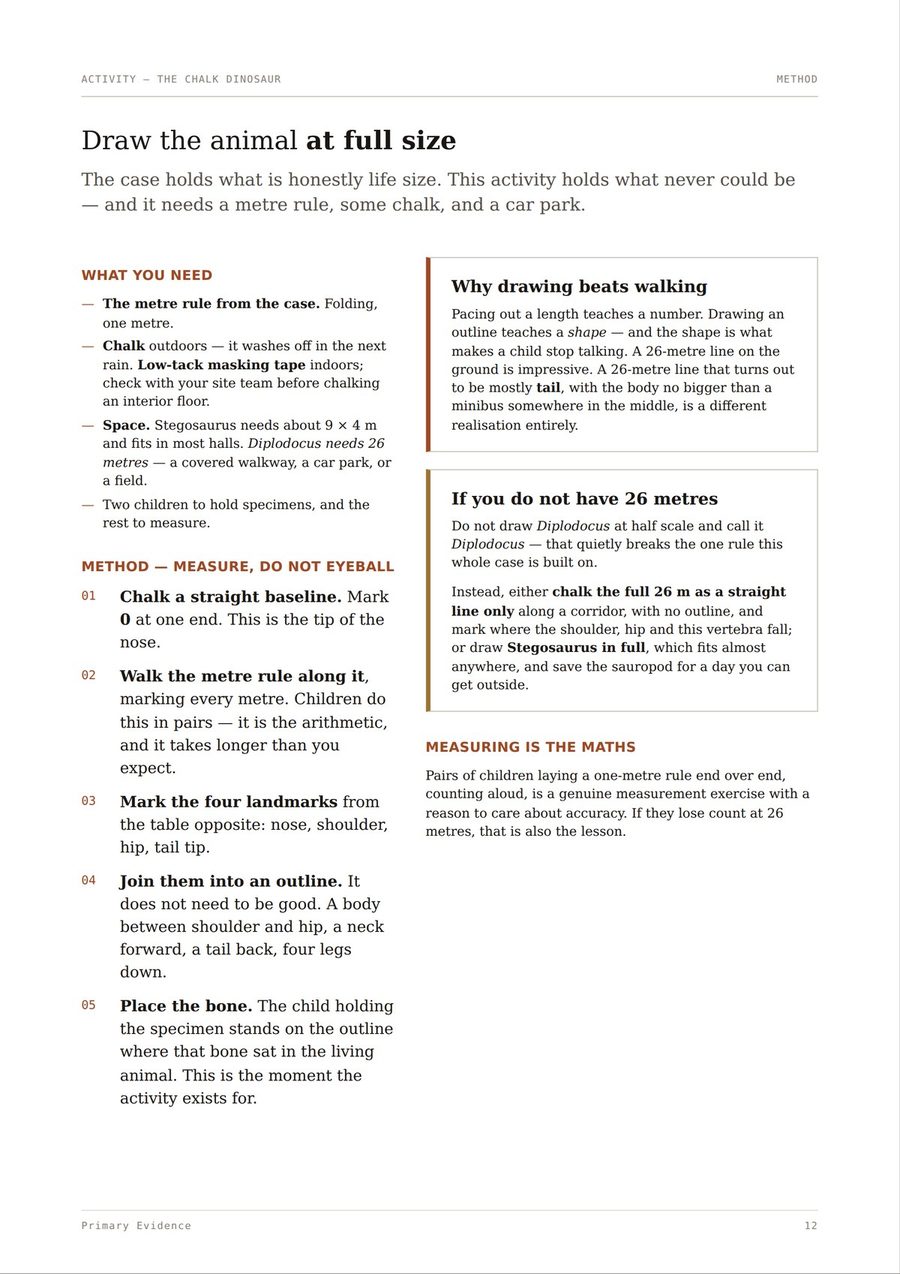
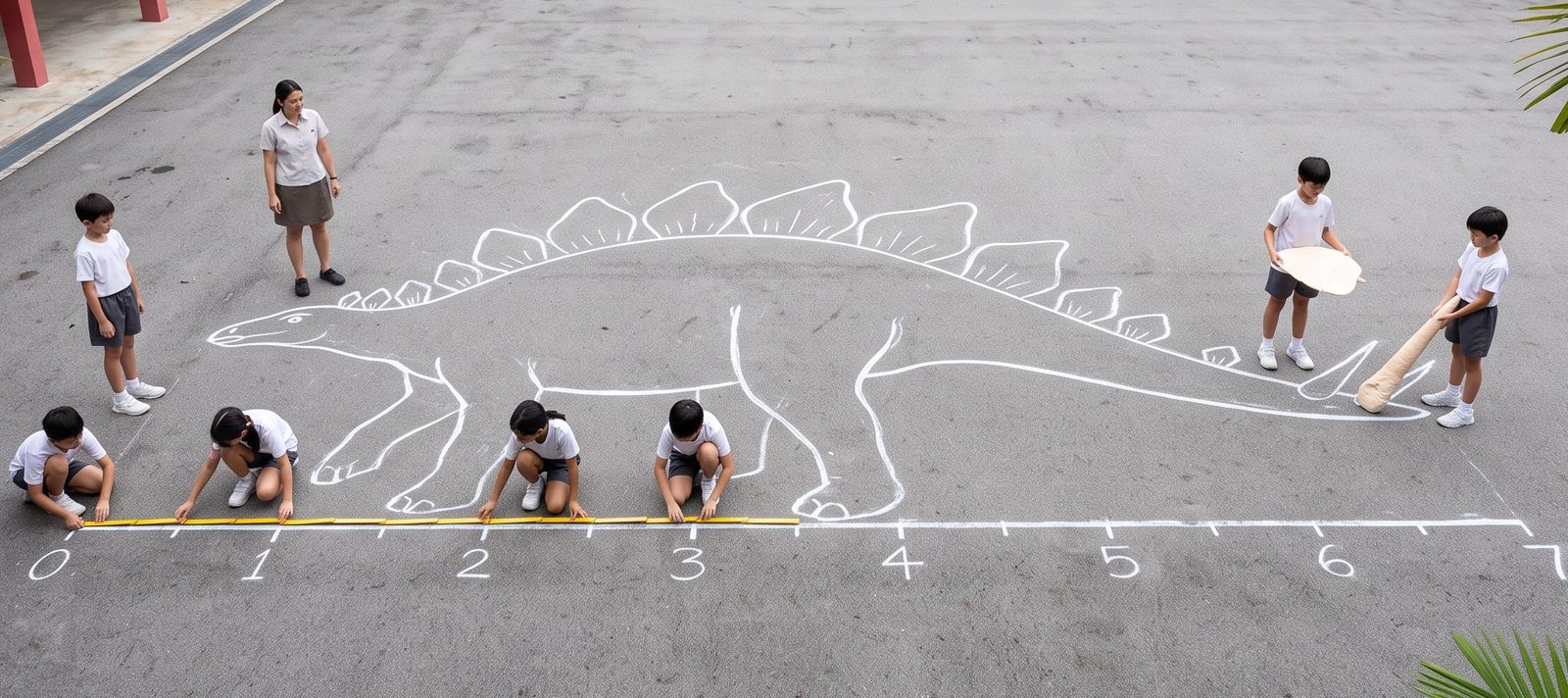
Draw the animal at full size.
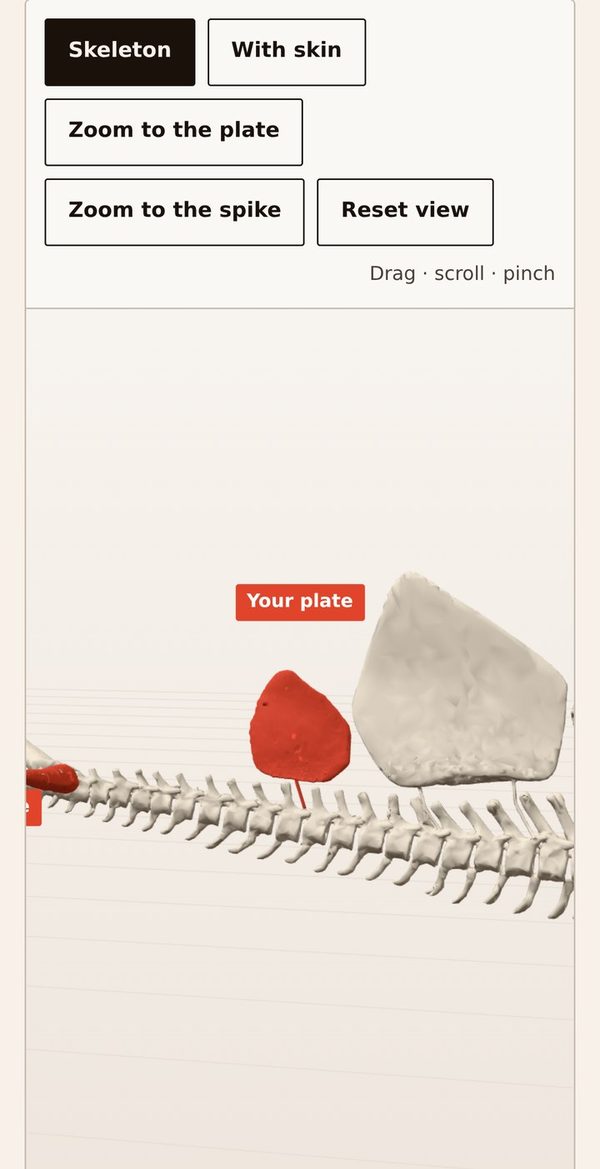
The kit holds what is honestly life size; the playground holds the rest. With chalk and the folding metre rule included in the kit, the class measures out a seven-metre Stegosaurus, then two children stand on the outline holding the plate and the spike where those bones once sat.
 Illustration
A page for every specimen
Open the specimen, meet the animal.
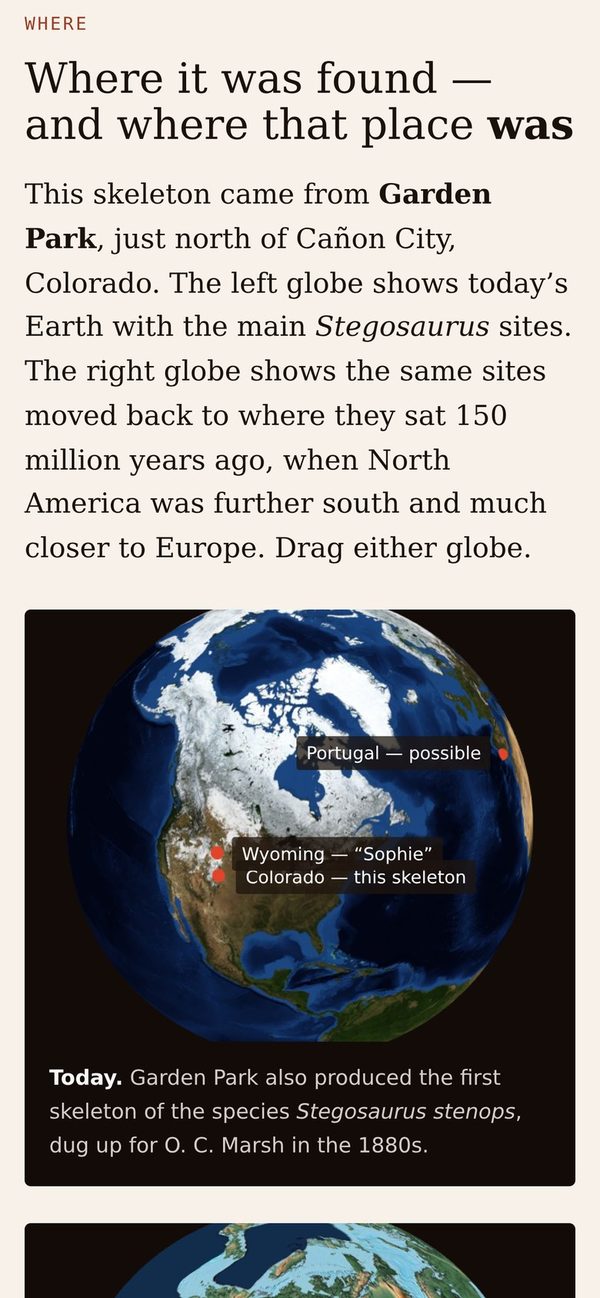
Every specimen in the kit has its own web page, on any phone, tablet or classroom screen. It shows when the animal lived, where its bones were found and where that place sat 150 million years ago, and the real skeleton in 3D at true size beside an adult and a 12-year-old.
Each claim is labelled: what the fossils show, what scientists think, and what nobody knows yet.
Contact
Bring it into your classroom.
A first look costs one CCA session. We bring the kit to your school, open it on a table, and let the students decide what’s interesting. Term loan, four-week block or outright purchase — terms on request.